By ATS Staff - March 11th, 2026
IoT Latest Technologies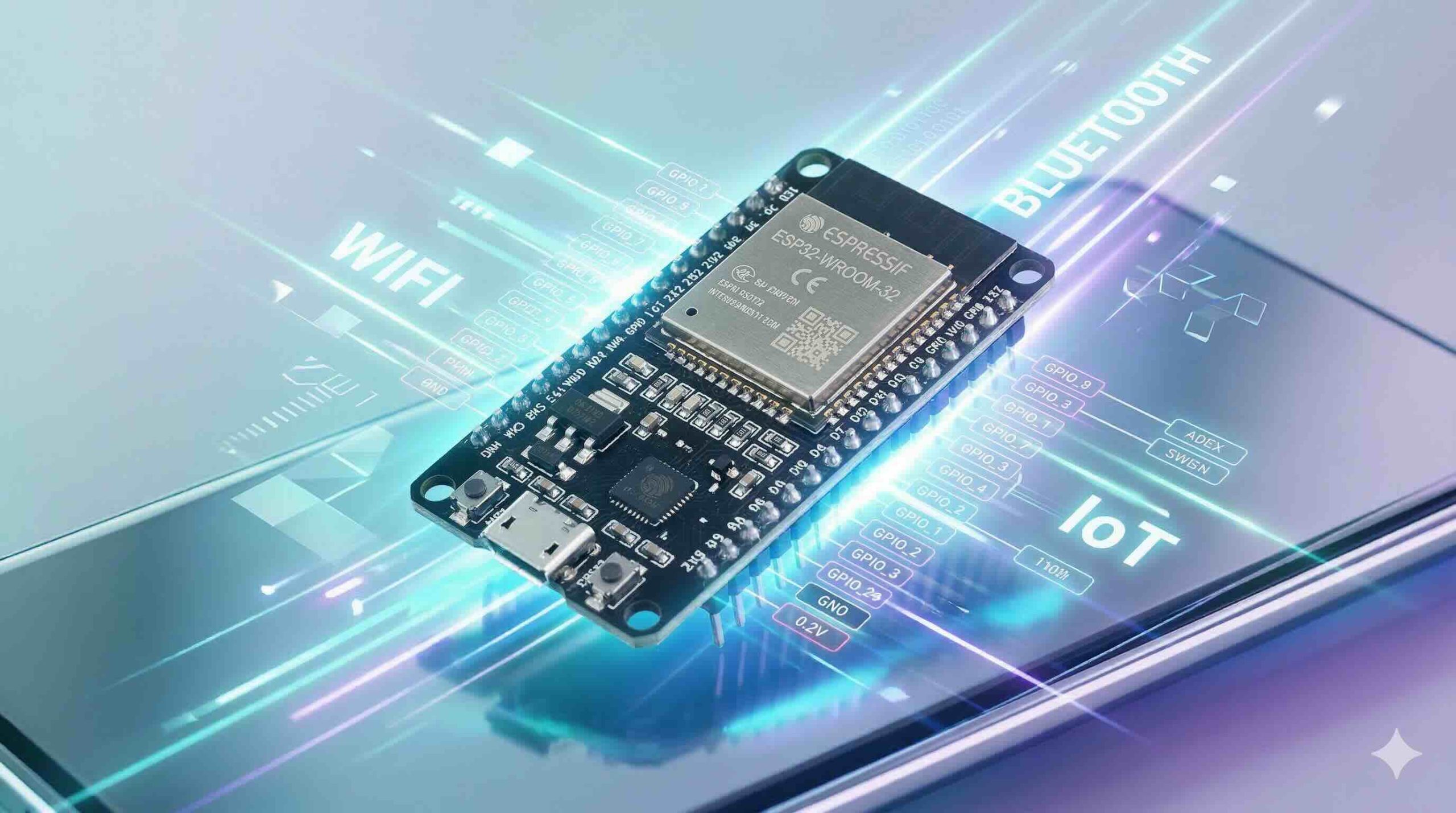
The ESP32 is a powerful and affordable microcontroller widely used in Internet of Things (IoT) and embedded systems projects. Developed by Espressif Systems, the ESP32 integrates Wi-Fi, Bluetooth, and powerful processing capabilities into a compact chip. Because of its versatility, low cost, and strong community support, it has become one of the most popular platforms for hobbyists, students, and professional developers.
Overview of ESP32
The ESP32 is the successor to the ESP8266, offering significantly improved performance and features. It is commonly used in smart home devices, wearable technology, robotics, and industrial IoT systems.
Many development boards such as the ESP32 DevKitC make it easy to prototype projects by providing USB connectivity, GPIO pins, and integrated voltage regulation.
Key Capabilities of ESP32
1. Built-in Wi-Fi and Bluetooth
The ESP32 includes integrated 2.4 GHz Wi-Fi and Bluetooth (Classic and BLE). This allows devices to connect to networks, send data to cloud services, or communicate with smartphones without requiring additional modules.
Example uses:
- Smart home automation
- Wireless sensors
- Remote monitoring systems
2. Powerful Dual-Core Processor
The ESP32 contains a dual-core Tensilica LX6 processor running up to 240 MHz, which provides much higher processing power compared to many traditional microcontrollers.
This enables:
- Multitasking
- Real-time data processing
- Handling networking and sensor tasks simultaneously
3. Rich GPIO and Peripheral Support
ESP32 boards offer a wide variety of input/output interfaces, including:
- Digital GPIO pins
- PWM outputs
- Analog-to-Digital Converter (ADC)
- Digital-to-Analog Converter (DAC)
- I2C, SPI, and UART communication
- Touch sensing pins
This flexibility allows the ESP32 to interface with numerous sensors, displays, and actuators.
4. Low Power Operation
The ESP32 includes several power-saving modes, such as:
- Light sleep
- Deep sleep
- Hibernation
In deep sleep mode, power consumption can drop to a few microamps, making it suitable for battery-powered IoT devices.
5. Large Memory and Storage
Typical ESP32 modules include:
- 520 KB SRAM
- External Flash memory (usually 4 MB or more)
This memory capacity allows complex programs and networking stacks to run efficiently.
6. Development Flexibility
Developers can program the ESP32 using several platforms:
- Arduino IDE
- ESP-IDF
- MicroPython
This flexibility makes the ESP32 accessible to both beginners and advanced developers.
Practical ESP32 Project Examples
Below are a few practical projects demonstrating the capabilities of the ESP32.
1. Smart Home Automation System
A popular ESP32 project is controlling home appliances through a smartphone or web interface.
Components:
- ESP32 board
- Relay module
- Wi-Fi router
- Mobile app or web dashboard
How it works:
- ESP32 connects to a Wi-Fi network.
- A web server runs on the ESP32.
- Users send commands from a phone or browser.
- Relays switch appliances like lights or fans.
Applications:
- Smart lighting
- Remote power control
- Energy management
2. IoT Weather Station
ESP32 can collect environmental data and upload it to the cloud.
Components:
- ESP32
- Temperature/humidity sensor (e.g., DHT22)
- Optional pressure sensor
- Cloud dashboard
Features:
- Real-time weather data monitoring
- Cloud data storage
- Historical data graphs
This project is commonly used for home automation and environmental monitoring.
3. Bluetooth Low Energy (BLE) Beacon
Using its BLE capability, the ESP32 can act as a beacon transmitting signals to nearby devices.
Applications:
- Indoor navigation
- Proximity detection
- Asset tracking
Smartphones can detect the beacon and perform actions based on location.
4. ESP32-CAM Security Camera
Using the ESP32-CAM, developers can build a low-cost surveillance camera.
Features:
- Live video streaming
- Motion detection
- Remote viewing through Wi-Fi
This is a common DIY home security project.
5. Smart Plant Monitoring System
The ESP32 can monitor soil moisture and automatically water plants.
Components:
- ESP32
- Soil moisture sensor
- Water pump
- Relay module
Functionality:
- Detects soil dryness
- Automatically activates watering
- Sends notifications to a smartphone
This helps automate gardening and conserve water.
Advantages of Using ESP32
Key benefits include:
- Low cost but powerful hardware
- Integrated wireless connectivity
- Large developer community
- Strong IoT ecosystem
- Flexible programming options
Because of these advantages, the ESP32 has become one of the most widely used microcontrollers in IoT development.
Conclusion
The ESP32 is a feature-rich microcontroller platform capable of handling wireless communication, sensor integration, and real-time processing in a compact and affordable package. Its combination of Wi-Fi, Bluetooth, powerful processing, and flexible development environments makes it ideal for a wide range of projects—from simple home automation systems to complex IoT applications.
With its growing ecosystem and extensive community support, the ESP32 continues to play a major role in the development of modern smart devices and connected systems.
Popular Categories
Agile 2 Android 2 Artificial Intelligence 51 Blockchain 2 Cloud Storage 3 Code Editors 2 Computer Languages 12 Cybersecurity 8 Data Science 16 Database 7 Digital Marketing 3 Ecommerce 3 Email Server 2 Finance 2 Google 6 HTML-CSS 2 Industries 6 Infrastructure 3 iOS 3 IoT 1 Javascript 5 Latest Technologies 45 Linux 5 LLMs 11 Machine Learning 32 Mobile 3 MySQL 3 Operating Systems 3 PHP 2 Project Management 3 Python Programming 28 SEO - AEO 5 Software Development 49 Software Testing 3 Web Server 7 Work Ethics 2